
Cryotherapy vs. Ice Baths After Strength Training: Which Recovery Method Is Right for You?
- Christine Hannon
- Apr 2
- 3 min read

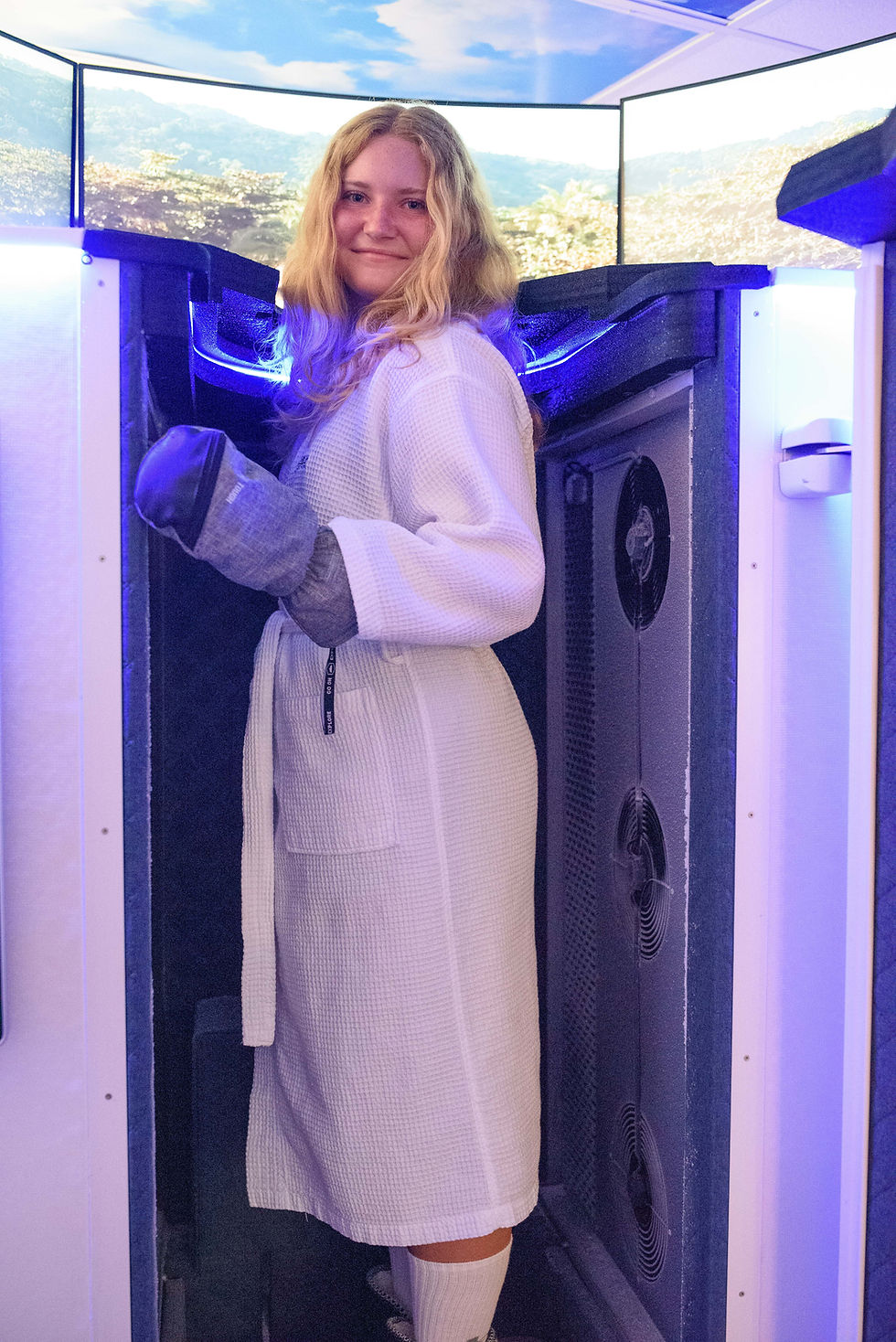
If you’ve ever finished a tough strength workout and thought, “Should I do cryotherapy or jump into a cold plunge?”- you’re not alone.
Both methods are popular for reducing soreness and speeding up recovery. But while they may seem similar, the science behind how they work is very different- and that difference can directly impact your results.
Let’s break it down in a way that actually makes sense (and helps you recover smarter).
Why Recovery After Strength Training Matters
Strength training creates tiny micro-tears in your muscle fibers. This leads to inflammation- which isn’t a bad thing. In fact, that inflammation is what signals your body to rebuild stronger.
The goal isn’t to eliminate inflammation completely- it’s to control it, so you can:
Recover faster
Reduce soreness
Maintain performance
Continue building strength
This is where cold therapy comes in.
Cryotherapy: A Systemic, Nervous-System Driven Response
Cryotherapy works by exposing your body to extremely cold, dry air for a short period (about 2–3 minutes). But here’s the key:
👉 It doesn’t need to deeply cool your muscles to be effective.
What’s Actually Happening when your skin hits extreme cold:
1. Your skin sends an immediate signal to your brain
Cold receptors activate and alert your central nervous system that your body is under cold stress.
2. Your brain triggers a full-body response
This includes:
Vasoconstriction (reducing blood flow to inflamed areas)
Release of endorphins (natural pain relief)
Increase in norepinephrine (reduces inflammation + boosts mood)
3. Your body regulates inflammation systemically
Instead of targeting one sore muscle, cryotherapy helps balance inflammation throughout the entire body.

Ice Baths / Cold Plunges: Deep but Localized Cooling
Cold plunges work differently. You’re submerged in cold water (typically 50–59°F) for a longer period- usually 10–15 minutes.
What’s Happening Here
1. Gradual cooling of deeper tissues
Water pulls heat away from your body more efficiently, allowing for deeper muscle cooling over time.
2. Localized inflammation reduction
This can help:
Decrease swelling in specific areas
Temporarily numb soreness
The Key Difference: Regulation vs. Suppression
Here’s where it gets interesting- and important for strength training.
Cryotherapy = Inflammation Regulation
Helps control inflammation without shutting it down
Supports recovery and muscle adaptation
Ideal for consistent training and performance
Ice Baths = Inflammation Suppression
Can significantly reduce inflammation in the muscle
Helpful short-term for soreness or acute fatigue
But when used too often post-strength training…
👉 It may interfere with muscle growth
Can Ice Baths Slow Muscle Growth?
Emerging research suggests that frequent cold water immersion immediately after strength training may:
Reduce muscle protein synthesis
Blunt hypertrophy (muscle-building response)
Interfere with long-term strength gains
Why?
Because your body needs some inflammation to rebuild stronger- and deep, prolonged cold exposure may overcorrect that process.
Which One Should You Choose?
Choose Cryotherapy if you want to:
Recover quickly without long sessions
Reduce soreness without compromising gains
Boost energy, mood, and circulation
Support full-body recovery
Choose a Cold Plunge if you:
Have a very specific, inflamed area
Need short-term pain relief
Aren’t focused on immediate post-lift muscle growth
The Bottom Line
Both cryotherapy and ice baths have their place- but they’re not interchangeable.
If your goal is to recover faster, feel better, and keep building strength, cryotherapy offers a more efficient, systemic approach- without potentially slowing your progress.
Experience Smarter Recovery at TherAnnu Restorative Spa
At TherAnnu Restorative Spa, cryotherapy is designed to help you:
Recover faster between workouts
Reduce inflammation without over-suppressing it
Stay consistent with your training
Feel energized- not drained
Book your session today and discover the difference a smarter recovery strategy can make.
*For informational purposes only. No material on this page is intended to be a substitute for professional medical advice, diagnosis, or treatment.


Comments